












Refractive Surgery at Cleveland Clinic
Refractive Surgery at Cleveland Clinic provides specialist evaluation and surgical treatment options for selected vision problems caused by refractive errors. The goal of refractive surgery is to improve the way light is focused onto the retina and may reduce dependence on glasses or contact lenses for appropriately selected patients.
Price
Price on Request
Why Price on Request?
The cost of refractive surgery varies according to the procedure selected, refractive error, corneal condition, diagnostic testing, surgical requirements, technology used, and postoperative care. A personalized treatment plan and cost estimate can be provided after comprehensive ophthalmic assessment.
Complete Description
What Is Refractive Surgery?
Refractive surgery includes procedures designed to correct selected refractive errors such as myopia, hyperopia, and astigmatism. Different techniques may be considered depending on the patient's eye anatomy, corneal characteristics, prescription, age, and overall eye health.
Refractive Error Assessment
Before surgery, the ophthalmologist performs a detailed evaluation of the patient's vision and eye health. The assessment helps determine the type and degree of refractive error and whether surgical correction may be appropriate.
Myopia Correction
Myopia causes distant objects to appear blurred. Selected refractive procedures may reshape the cornea or otherwise modify the eye's focusing characteristics to improve distance vision.
Hyperopia Correction
Hyperopia can affect near vision and, in some cases, distance vision. Selected patients may be evaluated for refractive surgery depending on the degree of hyperopia and the health and structure of the eye.
Astigmatism Correction
Astigmatism occurs when the eye has an irregular focusing shape. Certain refractive procedures may correct selected forms of astigmatism following detailed corneal assessment and surgical planning.
LASIK Evaluation
LASIK is one of the refractive surgery options that may be considered for appropriate candidates. Detailed corneal measurements and assessment of overall eye health are required before determining suitability.
Alternative Laser Vision Procedures
Patients who are not suitable for LASIK may be evaluated for other refractive procedures when clinically appropriate. The recommended technique depends on corneal characteristics, refractive error, and individual treatment requirements.
Corneal Mapping and Topography
Detailed mapping of the cornea can provide information about its shape, thickness, and structural characteristics. These measurements are important for evaluating suitability and planning certain refractive procedures.
Preoperative Eye Examination
Preoperative evaluation may include visual acuity testing, refraction, corneal measurements, eye pressure assessment, tear-film evaluation, and examination of the internal structures of the eye.
Contact lens use may need to be discontinued before certain measurements to allow the cornea to return closer to its natural shape.
Personalized Surgical Planning
Refractive surgery is planned according to the patient's individual eye measurements and clinical requirements. Treatment parameters are determined after reviewing the patient's prescription, corneal characteristics, medical history, and visual goals.
Surgical Procedure
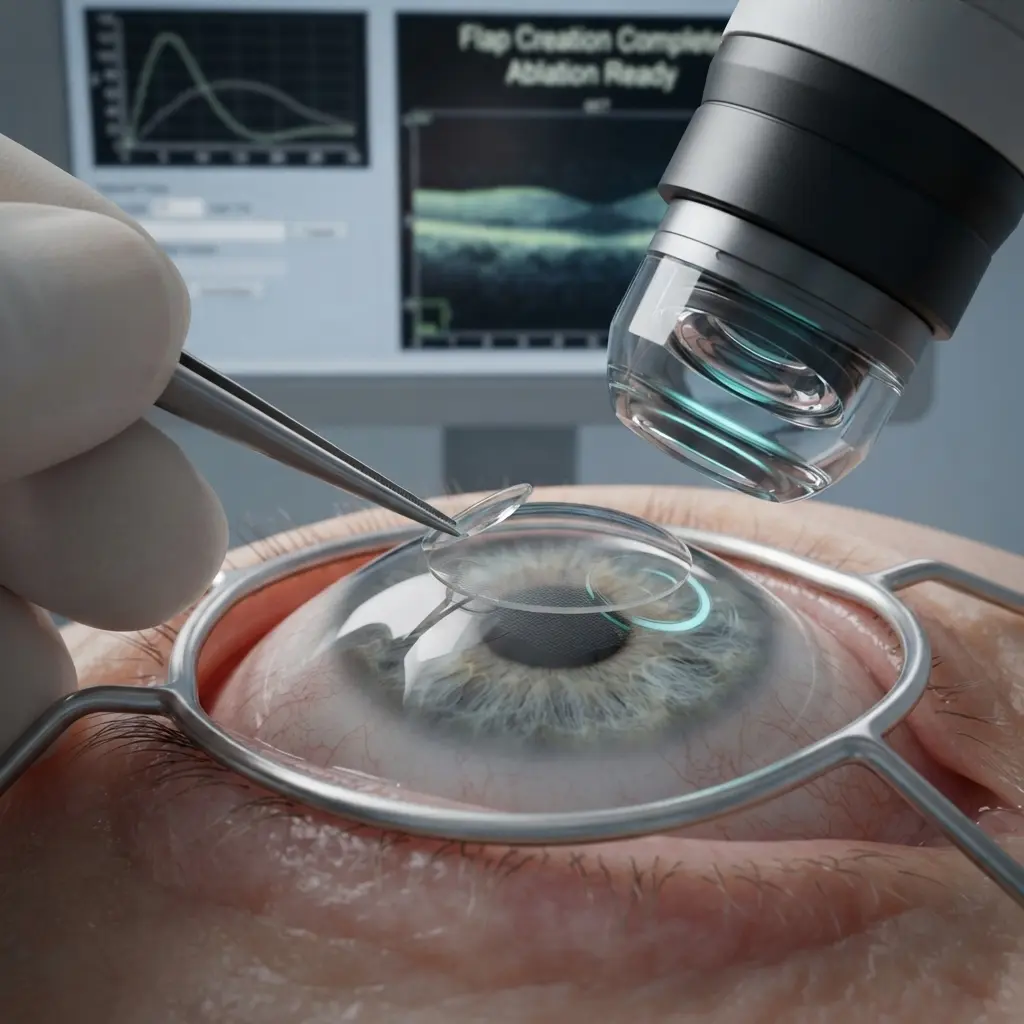
The exact technique depends on the type of refractive surgery selected. Laser-based procedures may reshape the cornea to modify the way light is focused, while other procedures may use different approaches according to the patient's condition.
Recovery and Follow-Up
Patients receive postoperative instructions and follow-up examinations to monitor healing and visual recovery. Temporary changes in vision, dryness, or other symptoms may occur during the recovery period.
Recovery varies according to the procedure and individual patient factors.
Potential Benefits
For appropriately selected patients, refractive surgery may improve unaided vision and reduce dependence on corrective glasses or contact lenses. The degree of improvement varies between individuals.
Safety and Potential Risks
Refractive surgery has potential risks and limitations. Depending on the procedure, patients may experience temporary dryness, glare, halos, visual fluctuations, or other visual symptoms. A detailed preoperative assessment helps determine whether the expected benefits and risks are appropriate.
Patients Not Suitable for Refractive Surgery
Not every patient is a suitable candidate for refractive surgery. Factors such as unstable prescription, certain corneal conditions, significant ocular disease, inadequate corneal thickness, or other medical considerations may affect eligibility.
Alternative vision correction options can be discussed when surgery is not appropriate.
Second Opinion
Patients who have previously been advised to undergo refractive surgery may seek a specialist second opinion. Review of previous eye examinations and corneal measurements can help clarify treatment suitability and available alternatives.
International Patient Care
International patients may receive refractive surgery evaluation based on their medical history, vision prescription, previous eye treatments, corneal measurements, and available diagnostic information. Appropriate assessment is required before treatment planning.
Benefits of Refractive Surgery
Specialist evaluation of refractive errors
Assessment of myopia, hyperopia, and astigmatism
Detailed corneal mapping and measurements
Evaluation for LASIK and other refractive procedures
Individualized surgical planning
Potential reduction in dependence on glasses or contact lenses
Postoperative monitoring and follow-up
Assessment of alternative vision correction options
Specialist ophthalmic care for complex cases
Why Choose Cleveland Clinic?
Cleveland Clinic provides specialist ophthalmic evaluation for patients considering refractive surgery. Comprehensive eye assessment and individualized treatment planning help determine whether laser vision correction or another refractive procedure may be appropriate for the patient's specific needs.
Cost & Price on Request
The overall cost depends on the selected refractive procedure, diagnostic testing, surgical requirements, technology, and postoperative care. Because these factors vary between patients, the service is offered at Price on Request following specialist evaluation.
Frequently Asked Questions
What vision problems can refractive surgery correct?
Refractive surgery may be used for selected cases of myopia, hyperopia, and astigmatism. Suitability depends on the patient's eye health, prescription, and corneal characteristics.
Is LASIK the only type of refractive surgery?
No. LASIK is one type of refractive procedure. Other techniques may be considered for selected patients depending on their eye anatomy, refractive error, and clinical suitability.
Can refractive surgery eliminate glasses completely?
Refractive surgery may reduce dependence on glasses or contact lenses for appropriately selected patients, but outcomes vary and some patients may still require corrective lenses for certain situations.
How is eligibility for refractive surgery determined?
Eligibility is determined through a comprehensive eye examination, including assessment of vision, corneal shape and thickness, eye health, medical history, and other factors relevant to surgical safety.
Can international patients receive refractive surgery at Cleveland Clinic?
International patients may be evaluated for refractive surgery subject to clinical suitability, available services, eligibility requirements, and appointment arrangements.
Product Details
Product Name: Refractive Surgery at Cleveland Clinic
Hospital: Cleveland Clinic
Brand: Cleveland Clinic
Country: United States
Location: Cleveland, Ohio, USA
Specialty: Ophthalmology / Eye Care
Service Type: Refractive Surgery
Customer-Facing Price: Price on Request
International Patients: Subject to applicable eligibility and appointment requirements
Related products

Frequently Bought Together
No frequently bought products found!
Products from this Seller
View All










Chemotherapy at Mayo Clinic

Immunotherapy at Mayo Clinic



Medical Tourism




Share with Friends
Trading is more effective when you share products with friends!Share you link
Share to